What the Loneliness Epidemic Keeps Missing
Aug 02, 2026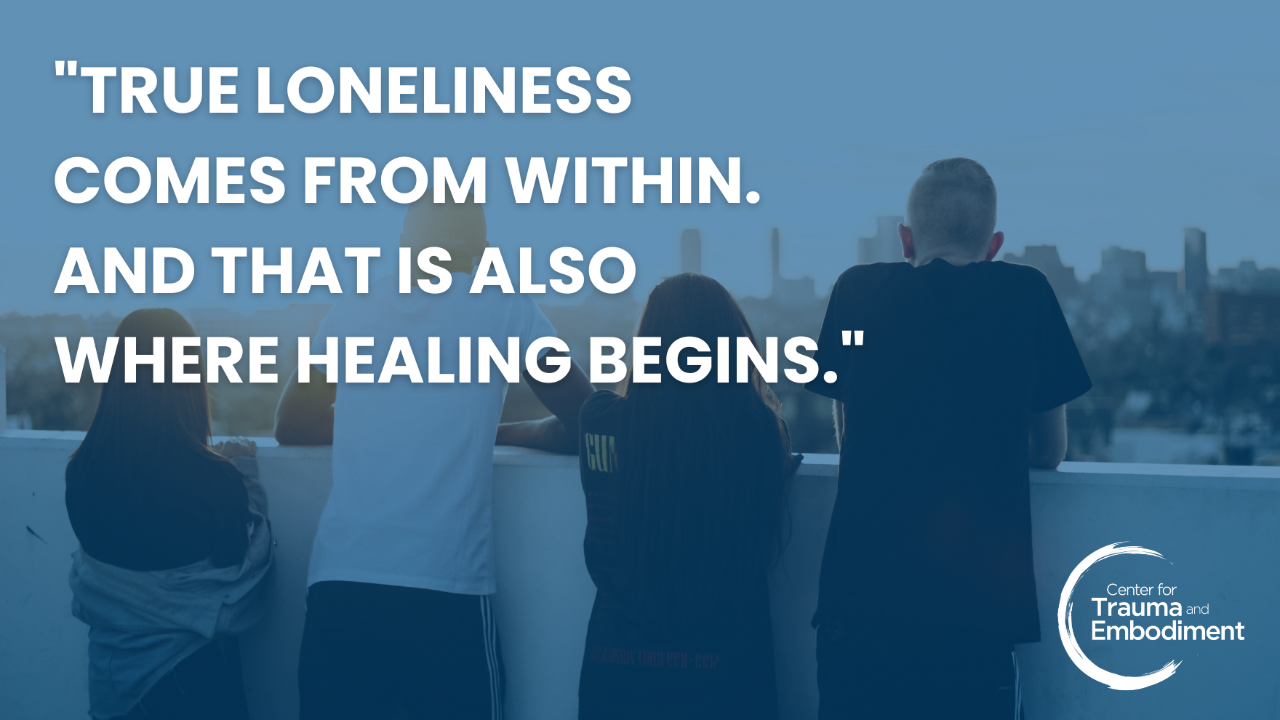
By Dave Emerson, Director of Research and Public Policy, Center for Trauma and Embodiment
Former U.S. Surgeon General Vivek Murthy has proposed that loneliness is one of the greatest threats to health and well-being, calling it an "epidemic." (U.S. Department of Health and Human Services)
The World Health Organization has also recognized loneliness and social isolation as significant drivers of poor health outcomes long-term. (WHO)
In our work with trauma over the past several decades, we've observed something about loneliness that rarely gets named.
Trauma, whether in the form of interpersonal violence and neglect or structural dynamics like racism and gender-based oppression, attempts to cultivate a profound atmosphere of isolation — social and otherwise — in order to function. The dualism of you/me, us/them, where value is hoarded by those with power and degraded in the person objectified, is required in order for trauma to exist. Surviving the degradation of value in the face of this onslaught changes us in many ways that may make human connection very difficult. (Frontiers in Psychiatry)
Trauma may be the most anti-social phenomenon there is — it works by severing the very connections we are wired to need.
But before we can connect authentically with others, there is a step we cannot skip if we are really going to address the loneliness epidemic. The first relationship that trauma takes away is our relationship to ourselves. For many of us, loneliness stems from this very real alienation from ourselves — rooted in what survival required of us.
In this light, the first step to addressing the loneliness epidemic is to find ways to practice not being lonely — starting with ourselves. This kind of practice looks different for everyone, but it begins with the body: learning to notice sensation, to make small choices, to be present in a physical experience without it feeling dangerous. The embodied care models developed at CFTE — including TCTSY, TIWL, and TIME — are built precisely for this. They exist to make that first step available to as many people as possible.
"True loneliness comes from within. And that is also where healing begins."
Learn more about CFTE's embodied care programs at healwithcfte.org