Healing Never Happens in a Vacuum: Why South Asian Trauma Needs Its Own Language
Nov 28, 2025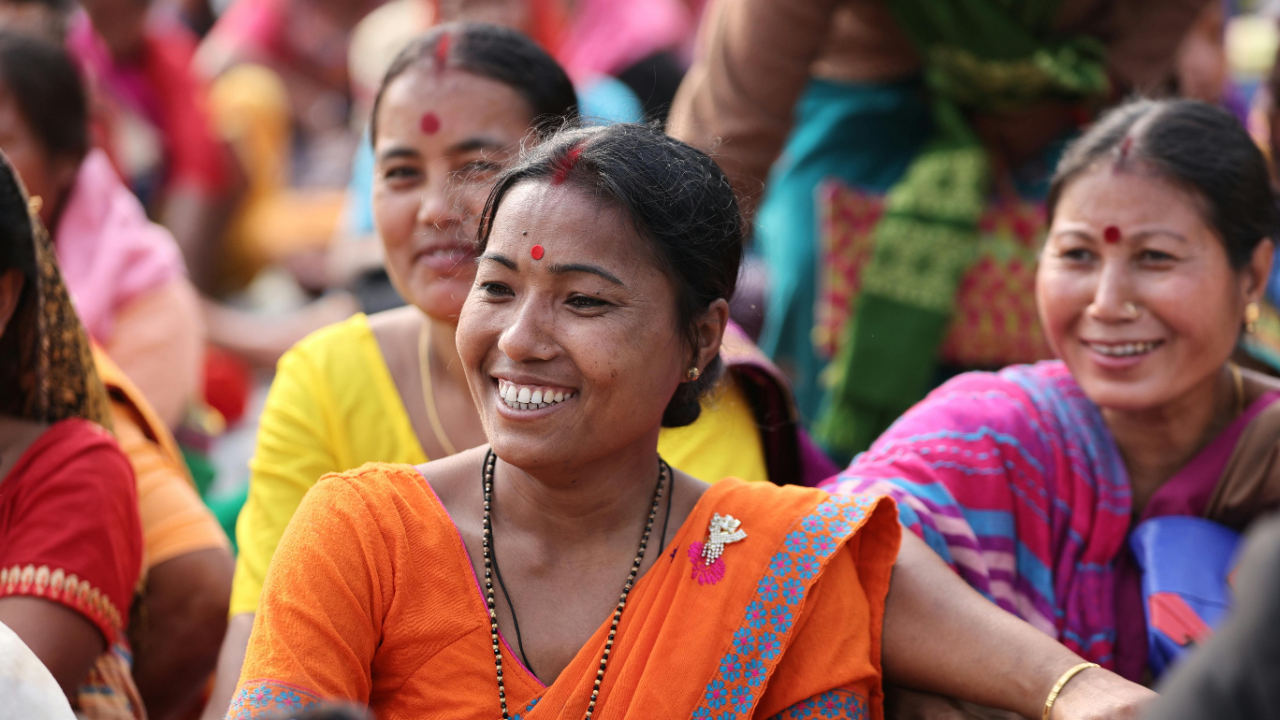
Dr. Shweta Sinha, Founder, The Amaltas Healing Project
Across the global wellness landscape, the experience of trauma is often presented as a universal echo – something that is experienced by everyone, regardless of history or culture. But after spending over a decade-and-a-half steeping my work in psychology, healthcare, communication, somatics, and South-Asian embodiment, I have come to understand that trauma is never culturally neutral. It lives and breathes in context. And for South Asian women, that context is often layered, intimate, and historically dense.
Growing up, studying, and working across India, the UK, and the US, I have lived most of my life moving between cultures. Everywhere I went, I encountered universal trauma frameworks that were brilliantly insightful and evidence-based. And yet, every single time, there was a moment when the framework slipped. A moment when the Western emphasis on autonomy, self-advocacy, individual boundaries, and emotional directness didn’t quite map onto what I knew to be true about South Asian cultural realities and socialization.
Girls across our cultures learn early on to swallow discomfort, to maintain harmony at any cost, and to anticipate the emotional needs of others before acknowledging our own. By the time we’re grown women, these patterns feel natural, inevitable, and almost... inherited. They travel with us when we leave home. They follow us when we migrate or immigrate out of our countries, quietly shaping our relationships, our bodies, and our nervous systems along the way.
Over the years, I began to see recurring themes in my students, clients, and community members: inherited silence around suffering, gendered expectations, caste- and class-based conditioning, family loyalty that can make boundary-setting feel like betrayal, and the lingering impact of colonization on how we interpret our bodies and selves. The more I listened, the clearer it became that healing for South Asian women requires language, practices, and frameworks shaped by our lived realities, not borrowed ones.
That is how my AMALTAS model came into being – a trauma-informed, culturally rooted approach built around Awareness, Movement, Alignment, and Liberation through Trauma-Attuned Somatics. It began inside the Indian context, because that’s where I began. But it has since evolved, through my work across borders and with diverse South Asian communities, into a framework that resonates broadly across the subcontinent and the many layered experiences of the diaspora.
AMALTAS is built on intersectional awareness, gender-responsive practice, collective meaning-making, and the belief that embodiment looks different across identities. That’s precisely what makes it adaptable. It can hold the realities of South Asian women and offer a flexible, culturally-sensitive trauma lens to practitioners and communities outside South Asia who are trying to understand trauma through identity, culture, body, lineage, and history. It’s specific enough to honour where we come from, and expansive enough to travel across borders. More than anything, I believe South Asian women deserve healing spaces that understand us, not as caricatures, not as stereotypes, and not as “difficult clients,” but as people shaped by complex histories and our brilliant survival strategies.
Healing in our own cultural language can be profoundly liberating, and if the AMALTAS framework can help carve a small doorway into that kind of healing, for South Asians and for anyone seeking culturally-grounded trauma care, then that is the work I will keep showing up for.
Author Bio
Dr. Shweta Sinha is a trauma-informed mental wellness researcher, somatic facilitator, and founder of The Amaltas Healing Project. With a Ph.D. in Multi-Sector Communication and over 15+ years of interdisciplinary work across psychology, media, genetics research, and embodiment studies, she specializes in culturally contextualized trauma frameworks for South Asian and globally diverse communities.
https://www.linkedin.com/in/shweta-sinha-phd/